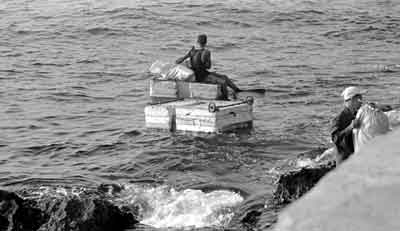
 I am not sure if that is really a word, but it is an apt description of these fellows who go "deep-sea fishing" spending the night at sea in hopes of a good catch. They have crafted rafts from large Styrofoam containers and old lumber. These are powered by legs and swim fins of the fishermen. They typically leave and return with the tide, almost all staying out 18-30 hours. They carry a bottle of rum, some food, water, and a big hat to protect them from the sun. Although this seems like a dangerous profession to me, those I have talked with are happy and they enjoy their work. All hope to make a good catch of good eating, tasty fish that will be sold to the better restaurants. This another of the fascinating ways the Cubans have adapted to their lives and hardships.
Thursday, March 30, 2006
Pescadoros
I am not sure if that is really a word, but it is an apt description of these fellows who go "deep-sea fishing" spending the night at sea in hopes of a good catch. They have crafted rafts from large Styrofoam containers and old lumber. These are powered by legs and swim fins of the fishermen. They typically leave and return with the tide, almost all staying out 18-30 hours. They carry a bottle of rum, some food, water, and a big hat to protect them from the sun. Although this seems like a dangerous profession to me, those I have talked with are happy and they enjoy their work. All hope to make a good catch of good eating, tasty fish that will be sold to the better restaurants. This another of the fascinating ways the Cubans have adapted to their lives and hardships.


Tuesday, March 28, 2006
Pneumatico
 I have been away for the past week. This photo, titled "Pneumatico," shows a young fisherman, his fishing vessel (the large inner tube), and his girl friend who is welcoming him back from his day at sea fishing. This is a common sight. One can stand at the point where the ocean and the Bahia meet and watch the young men in their inner tubes with swim fins to propel them head out toward the horizon for a day's fishing. They usually have a good catch for these are productive fishing waters. Some will go in the afternoon and remain out at sea overnight which is a cooler way to go fishing.
Sunday, March 19, 2006
Jaguey
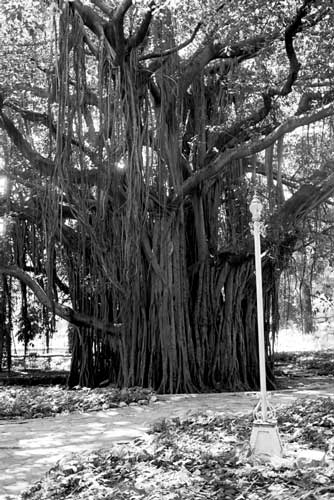 These beautiful trees are all about in Havana. This one is in the park along Avenida Cinco in Miramar. That is a nice place to walk. Many nice buildings are there and a lot of the middle and upper middle class Cubans have houses in this area. It is also the embassy areas and some homes have been taken over as government agencies and offices. The roots of the Jaguey trees grow up in the air so that the tree rests upon its roots way up above the ground. I always ask my students to figure out how they plant these trees that require above ground roots. I am not sure I know, either.
Wednesday, March 15, 2006
Along the Malecon
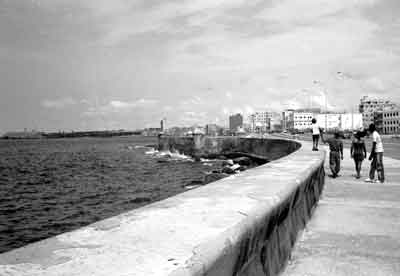 Probably the major attraction in Havana is the Malecon. This broad boulevard sweeps along the sea wall. The water and foam from breaking waves blows and sometimes flows over the wall. People fish along there, young folks hang out at night and party, families walk along in the afternoon, and often one sees some person standing looking at the sea. I wonder at them, are they looking at the sea or are they looking at Florida and their friends and family who are there?
Saturday, March 11, 2006
Print Gallery
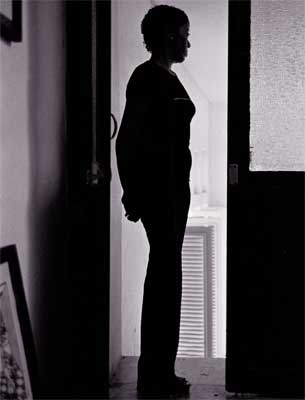 This attractive woman was the gallery manager at the graphics workshop immediately adjacent to the Catederal. In this workshop many printmakers work. Some are students. There is a gallery upstairs where prints are sold. One can purchase original art in this gallery for quite low prices. It is interesting to walk through the large area where the artists are at work and talk to them about what they are doing. These sorts of activities abound in Havana which in many regards is no different from other medium to large cities.
Thursday, March 09, 2006
Cross
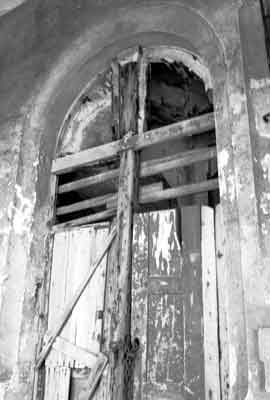 Sometimes the old lumber used to board up the falling in buildings makes unusual shapes. I thought this made a perfect cross. This building was along the malecon. There many buildings are being restored, even if the pace is quite slow. Most of the buildings along there show the wear and tear associated with being on the seafront and exposed to the tropical storms that come each summer and fall.
Tuesday, March 07, 2006
Mercado
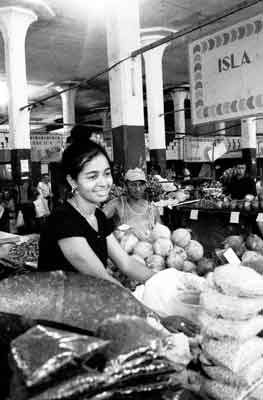 Another photo from the market. This attractive young woman is doing a brisk business in her vegetables and fruit. Most people are happy to smile and let you make their picture. I always spend at least one afternoon in this market when I visit. It is always a hotbed of humanity-the laughter, music, smells, chatter of conversation, and the happiness that pervades is uplifting. I received an email last night. One of my friends, Ramon, just received a national award. Ramon was awarded the National Prize "Reason For Being" by the Alejo Carpentier Foundation for the book "Dictionary of Cuban Photography". Congratulations to him, he is as tireless intellectual who is a genuine polymath.
Monday, March 06, 2006
Eat mor' chikn
 This chicken was ruling the roost one day in the large market, the "Free Market" at Quatro Caminos in Cerro. That is a terrific place to visit. It is full of people, food, all sorts of vegetables and fruit. Upstairs is the meat market which is sort of bloody for vegetarians to visit. There are lots of friendly people there. Things may be difficult in Cuba, but the people do seem to be able to stay friendly, helpful, and open. Outside the street is busy, nearby are several shops that sell trinkets and other paraphernalia for Santeria practitioners. This is not much of a tourist area so there are few guys on the street selling cigars, etc.
Friday, March 03, 2006
80-60-40
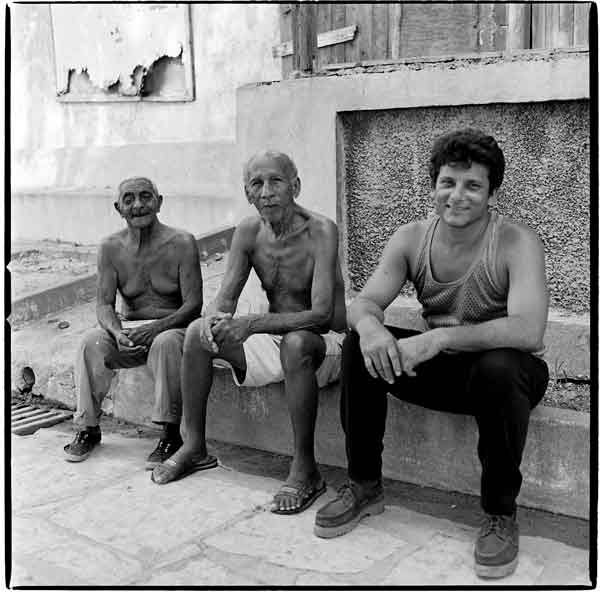 These three gentlemen were sitting out on the curb in the small fishing village just outside Havana that is named Baracoa, not to be confused with the more famous Baracoa on the eastern tip of the country. This was a quaint village with many people lingering about, not many seemed to have jobs to go to. Interestingly these three represent three generations of the same family-grandfather, father, and son. This sort of multi-generational living and socializing arrangement is very common. In almost all homes one encounters at least three generations living together in apparent harmony. That is a nice thing.
Thursday, March 02, 2006
Rosie
 This is Rosie. She was across the street from the little boy below. She was much more animated, drinking her milk, and playing with this old bent piece of metal tubing. I met her Mom and her Dad. I took several pictures, and dropped by a few days later with some soap, Bic pens, pads, and a few Bic lighters. Rosie is more like the majority of the young kids, they do get their rations, but there is still a chronic shortage of food. I know some Moms who nurse their toddlers, in their minds it is more efficient for the mother to eat and the child to nurse. This seems to defy the law of conservation of matter and energy in my view, but I admit, I can see the logic in their thinking.
Wednesday, March 01, 2006
Soy Cuba
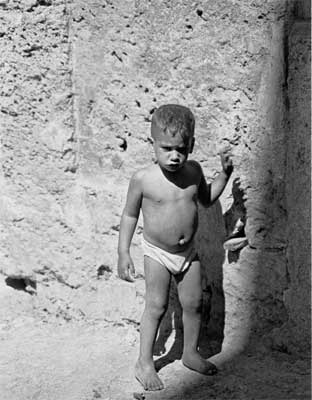 This poor little fellow was in the street one afternoon in Habana Vieja. He was just standing there as a couple of other kids played. They were much more energetic. This child has a swollen belly, swollen ankles and is in the early stages of malnutrition. I suspect some one else is getting his ration of milk and meat. I realized that in spite of universal access to various services, you can't make all the people responsible and caring, no matter what you do. Unfortunately many people go to bed hungry in Cuba each night. I have had many people-Cubans and otherwise-argue with me on this point.
 Again, an issue where the predominant shade is gray-not black or white.
Tuesday, February 28, 2006
Old door
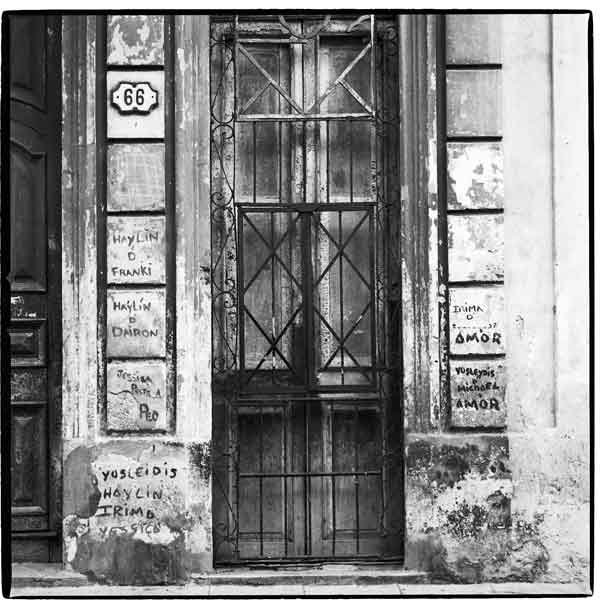 This old door with all the grafitti appealed to me. All the boys'and girls'names made me want to call it "El Puerto de l'amore." But, I wasn't sure of the Spanish, so I passed on that. I realized this morning that I had been lax in posting pictures, so I am cranked back up. I have been busy upgrading my web site, so check that out if time permits.
Saturday, February 25, 2006
Che Tees
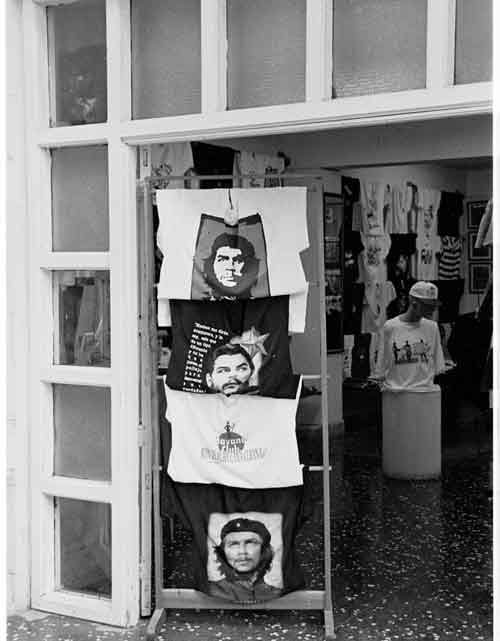 Che tee shirts are encountered the world over. There are many images of him all over Cuba. Clearly he and Mao are the two most famous revolutionaries in recent history. Che was made a martyr, probably intentionally, and has proved more useful to the revolution dead than he was alive. An intellectual, a hardcore revolutionary, a husband and father, he had no qualms about killing those who stood in the way of the revolutionary movement. It is unusual to see young Cubans wearing Che tee shirts. They do turn up at parades and rallies, but that is about it. Most of the tees are on sale to tourists. It is hilarious to see older bulky tourists in their Che Guevara berets.
Friday, February 24, 2006
Chapel in Bauta
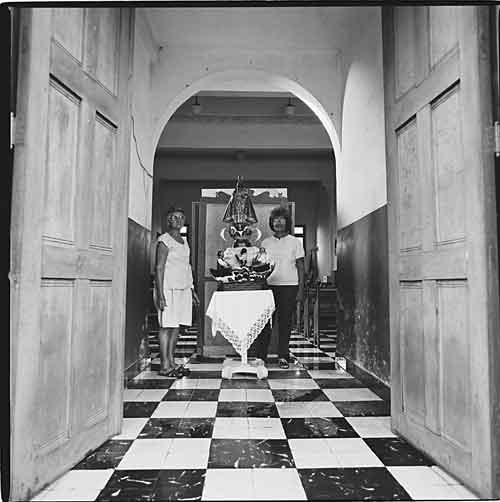 This lovely small chapel was being cleaned by these two ladies. I wanted to take their picture, but they insisted that they must finish, put up their mops and buckets before any photos were made. There was a very nice replica of a ship, perhaps Noah's Ark, in the vestibule of the chapel. There are churches and chapels throughout Cuba. There are at least two synagogues in Havana. I have been to church (Episcopal) in Havana, there were perhaps 300-350 people there, no one seemed the least bit intimidated or nervous. All of the rumors about the suppression of the church and possession of bibles or the persecution of church going people is just not the case. It might have been years ago, but certainly since the visit of Pope John in 1998 things have changed.
Thursday, February 23, 2006
Checking the news in Vinales
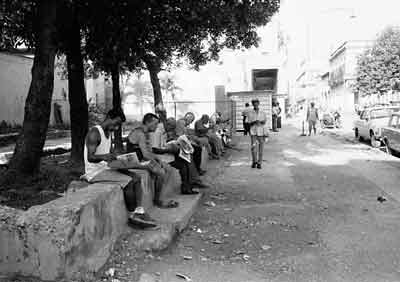 The morning paper is dutifully read, and it is one of the ways of communicating the latest antics of the government to the people. The main paper, Granma, named for the boat that brought the revolutionaries back from Mexico, is the leading goverment journal. It is typically about eight pages, costs fifty cents for tourists and a couple of pesos to the local people. These fellows are spending a lazy, hot summer afternoon, hanging out and reading the paper. Hanging out seems to be one of the major pastimes and avocations amongst the people.
Wednesday, February 22, 2006
A Song for La Caridad del Cobre
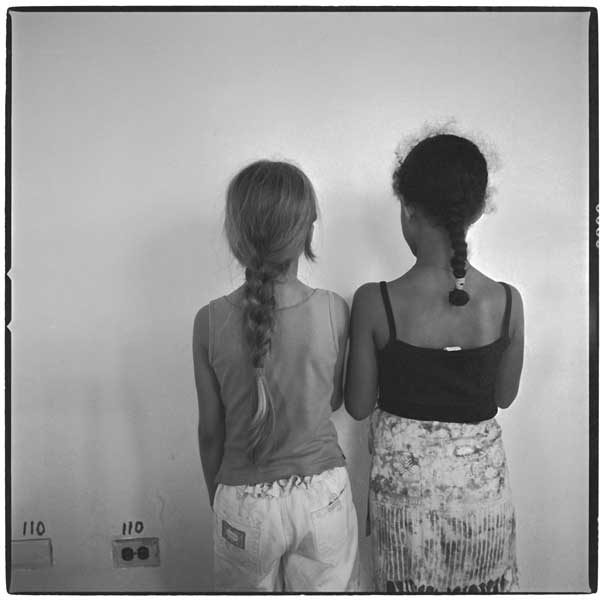
The white girls lift their heads like trees
The black girls go
Reflected like flamingoes in the street.
The white girls sing as shrill as water,
The black girls talk as quiet as clay.
The white girls open their arms like clouds,
The black girls close their eyes like wings:
Angels bow down like bells,
Angels look up like toys.
Because the heavenly stars
Stand in a ring:
And all the pieces of the mosaic, earth,
Get up and fly away like birds.
------The Seven Storey Mountain, Thomas Merton, 1948
Monday, February 20, 2006
Millenium
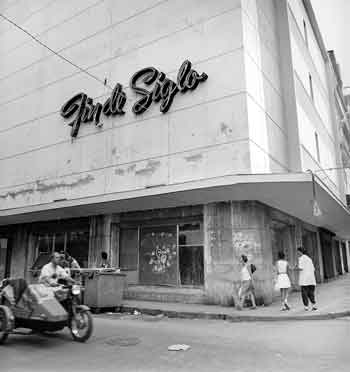 I made this photo in the year 2000. I liked the name of the store. This was a major store in a major shopping area. There were what had once been nice shops and boutiques along the street. They were all now empty and closed, or barely open as peso stores. Over the past five years, the area has made a slight come back as more tourist hotels have opened nearby, and there are actually a few shoppers. The department store remains closed and in disrepair. It is not unreasonable that this has happened. Most of the elites and the upper middle class Cubans departed early in the history of the revolution. As the people from the country side moved into the city, they had to learn how to finction in the city. By the time they were educated and ready for assimilation into society, they had been indoctrinated into the great middling effect of revolutionary thinking. The 1900s were in fact a final century for a way of life in Cuba. Things have changed for the better and the worse, but they will never return to the way they were in the last mid-century.
Sunday, February 19, 2006
America
 Made this photo one Saturday Morning over in Cerro. Doesn't mean anything, but it is one of my favorite photos. I just like it a lot. I don't think every photo has to have a meaning, it can just be a nice image or an appealing image. This works for me.
Saturday, February 18, 2006
Morning Traffic in Trinidad
 Trinidad hums in the morning. People are out on the street walking, visiting, having their coffee. There are a lot of these sidecar/motor cycles in use. They were imported by the Russians and many remain functional, especially out in the country side. This city has had a fair amount of restoration, the entire place having been declared a"World Heritage Center". It is friendly, almost too much so. The advent of tourists coming by the bus loads has promoted the growth of jineteros, hustlers, who offer lodging, meals, cigars, rum, and other delights to the tourist. The jineteros are mainly middle men, or agents, rarely is there any vilient crime. There is a growing amount of petty crime- purses, cameras, small handbags and backpacks being snatched-as there is in every tourist area in the world, third or otherwise.
Friday, February 17, 2006
Macheteros
 The term "companero" is generally regarded much like "comrade" in the soviet era. These guys are really macheteros. They are getting the sugar cane they have cut weighed. It is mindboggling to see the old antiquated equipment and ox drawn wagons that are still being used in the small sugar industry that persists in Cuba. This timeless scene was photographed on the road to Viñales. This is hot, back breaking manual labor that only a few still perform. The zafra or sugar harvest has been the topic of both books and movies. The last time I was at Centrale Australia, the sugar refinery at the turn from the main highway toward Playa Giron, the were dismantling the large plant. I tried to take some pictures, but was chased away by a couple of security guards. When asked why I couldn't make some photos, they answered "It's part of the economy, top secret." I accepted that as part of the natural Cuban paranoia. It never occurred to me that they might have WMDs hidden in there.
Subscribe to:
Posts (Atom)